

Git hosting, code review, CI and packages in one place, hosted in the EU.
CodeVault is where teams keep their code and work on it together: repositories, pull requests, issues, roadmaps, pipelines and package registries. It also records the structure of your databases with every release, so you always know what changed and can prove it.
Available 11 October 2026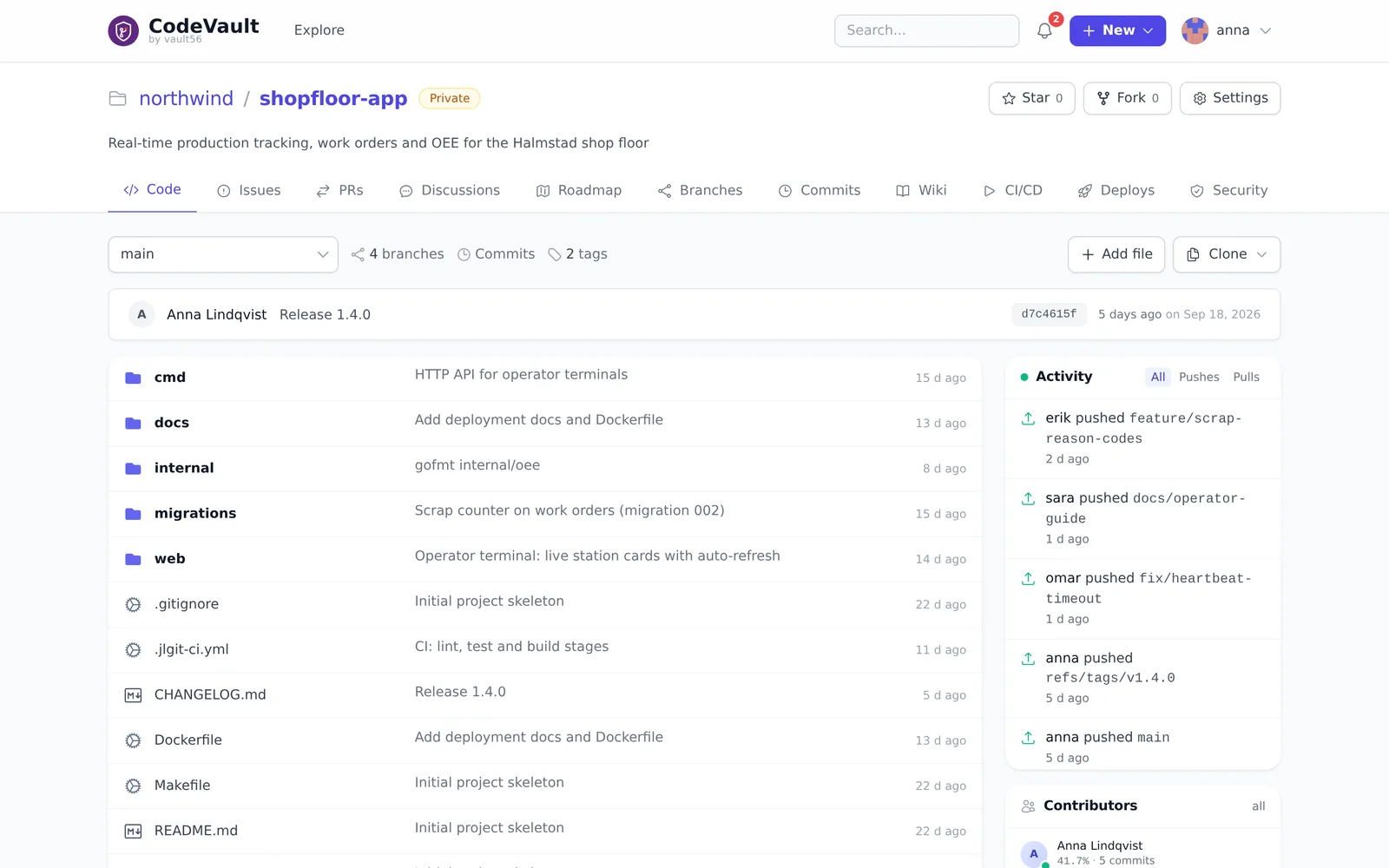
What CodeVault does
For development teams that want their code on EU infrastructure, especially teams that ship database changes and care about audit.
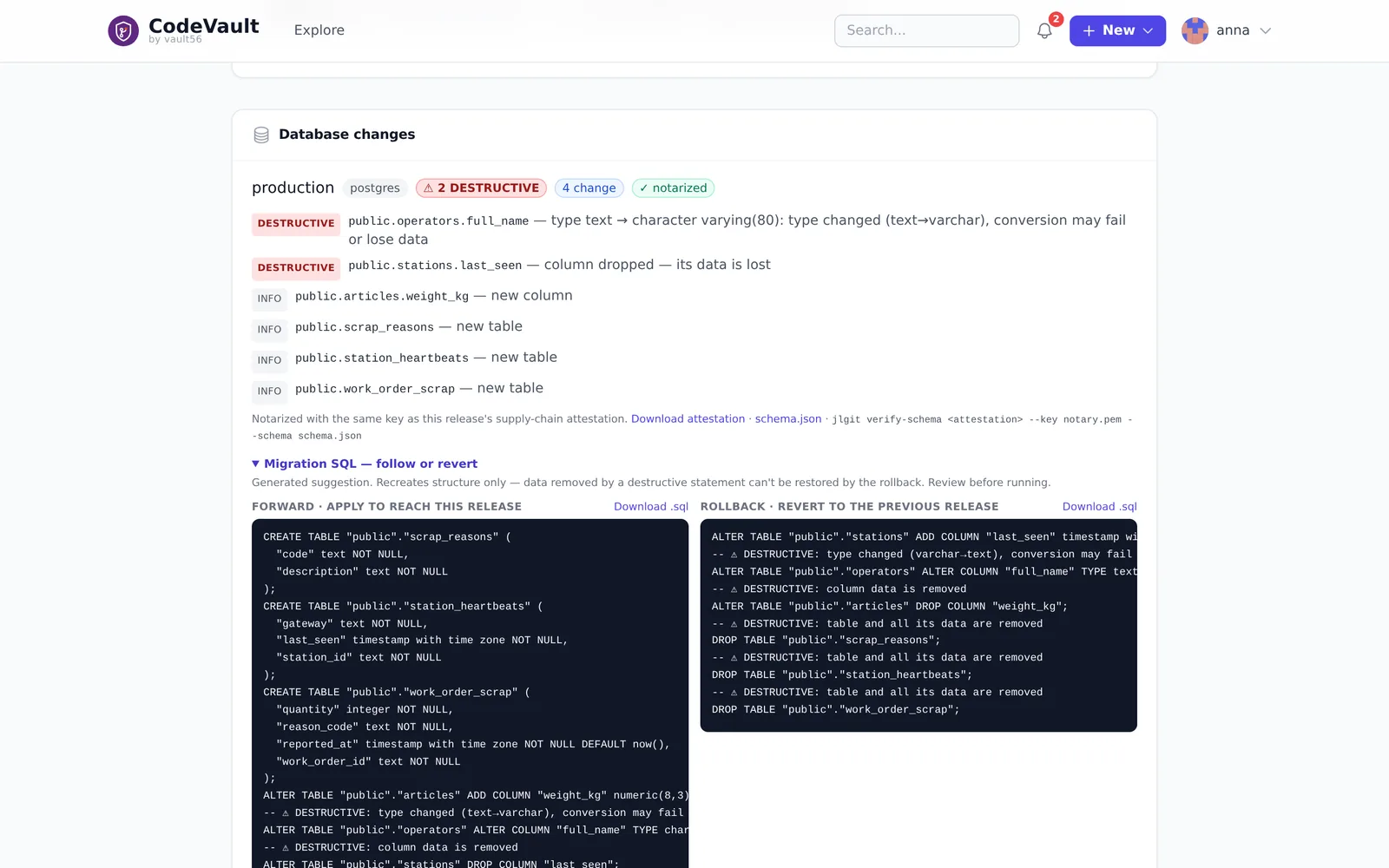
Code and review
Pull requests
Approve or request changes, suggest edits, and merge by commit, squash or rebase.
Code owners and merge queue
Route reviews to the right people and merge safely in order.
Issues, roadmap and boards
Labels, milestones, a drag-to-reorder roadmap, Kanban boards and a wiki.
Community
Let signed-in users suggest features, vote, run polls and discuss, per repository.
CI/CD and packages
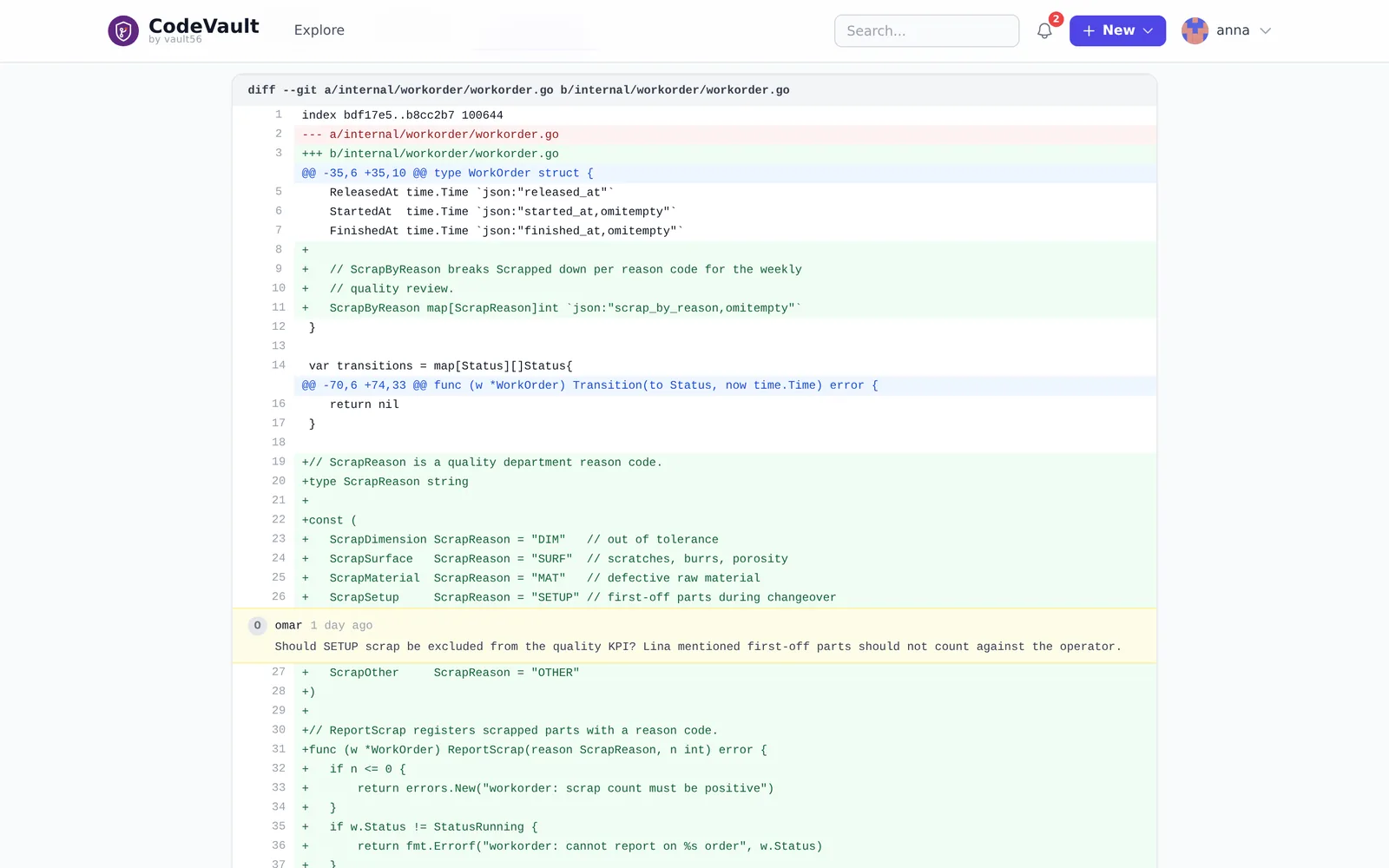
Pipelines in your repo
Stages, matrix jobs, caching and CPU and memory limits per job.
Schedules and reruns
Timezone-aware schedules, an honest queue, and cancel or rerun from the web.
Package registries
Publish npm, PyPI, Go and generic packages next to your code.
Container registry
Push and pull images with the standard Docker registry API.
Database schema history
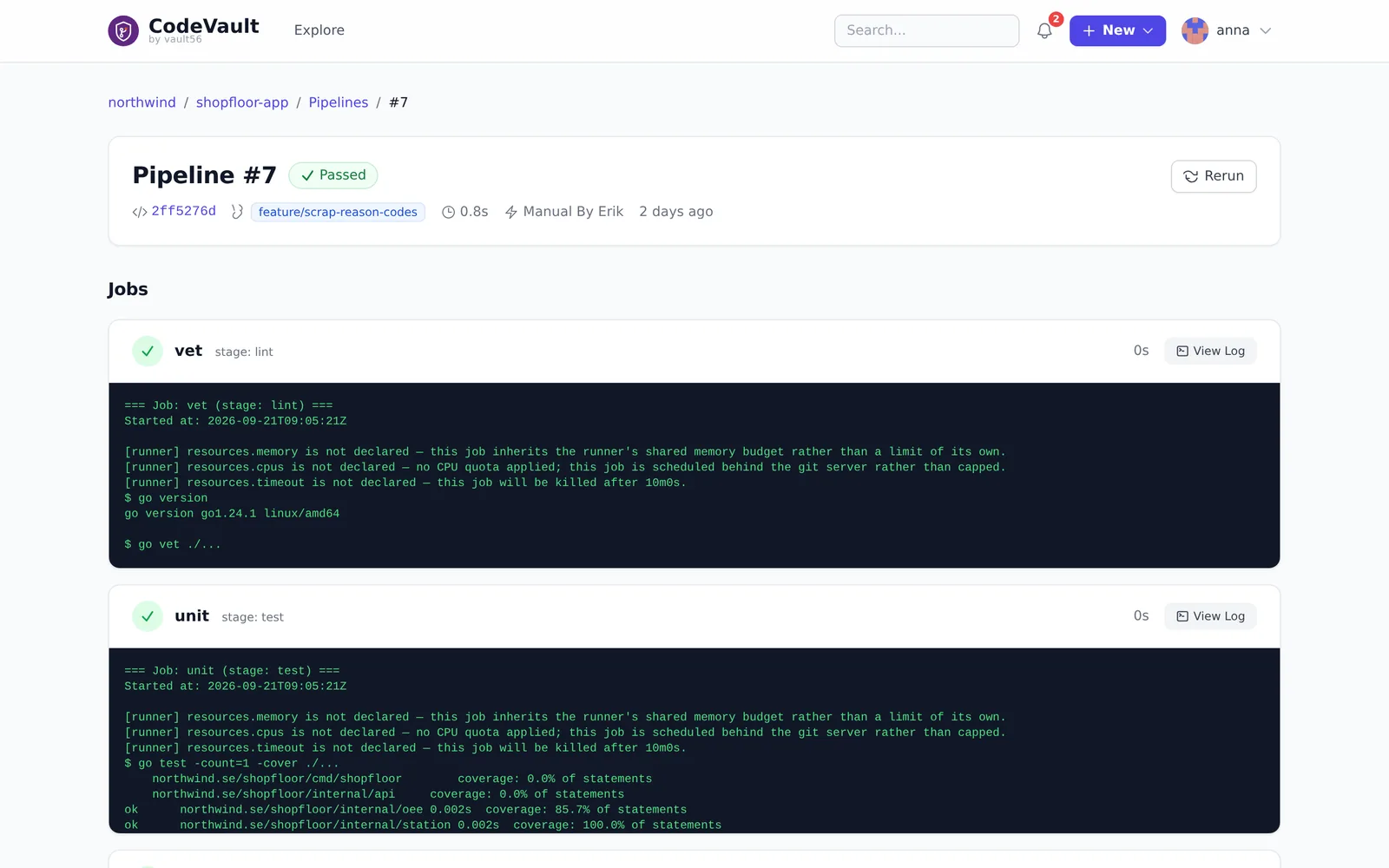
Know exactly what your database looked like at every release.
A snapshot per release
PostgreSQL, MySQL, MariaDB and SQL Server schemas, with a diff and generated forward and rollback SQL.
Tamper-evident
Each snapshot is signed and can be verified offline.
Drift alerts
A check every 30 minutes tells you when a database no longer matches its release.
Migration gates
Preview migrations in pull requests and block destructive ones before merge.
Security and control
Sign-in options
Two-factor login, SAML, LDAP and sign-in with Vault56, GitHub, Google or GitLab.
Access rules
Limit repositories by network or time of day, across web, Git and API.
Audit and scanning
Audit log with CSV export, secret scanning and optional virus scanning.
Editor extensions
Review pull requests, see CI status and blame inside VS Code.
Runs on Vault56
CodeVault signs users in with their Vault56 account, backs up to Vault56 file storage, and receives signed updates from the Vault56 release service. Merges can publish new releases of your own software through the same service.
- Data and APIs
- Accounts and sign-in (used)
- File storage (used)
- Realtime and push
- Workflows and automation
- Functions
- AI
- Agents and devices
- Signed updates (used)
- Marketplace and billing
Get CodeVault on 11 October 2026
Try the platform today. The products open to everyone on 11 October 2026.